 I am sooooo excited to be featured as a guest writer for Cindy Ingram over at the Art Class Curator! Swing on by and read about my Art Madness tournament that I do with 3rd grade! It's a great way to tie in art history and critiquing! You won't be disappointed!
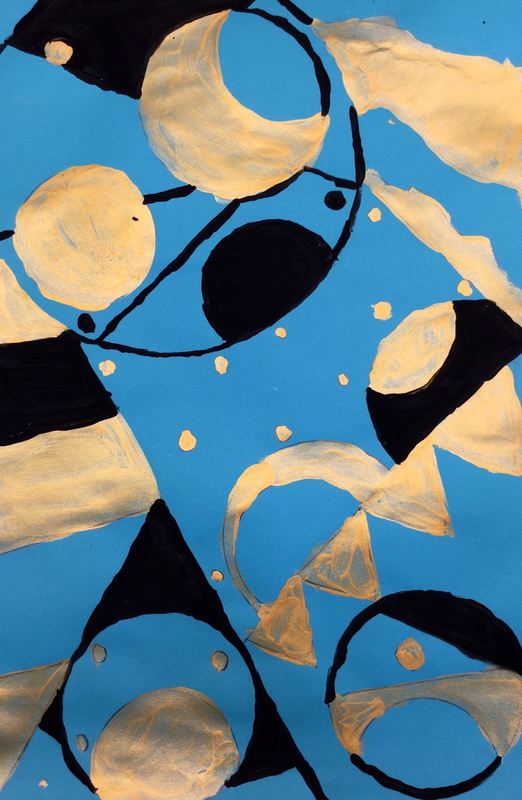
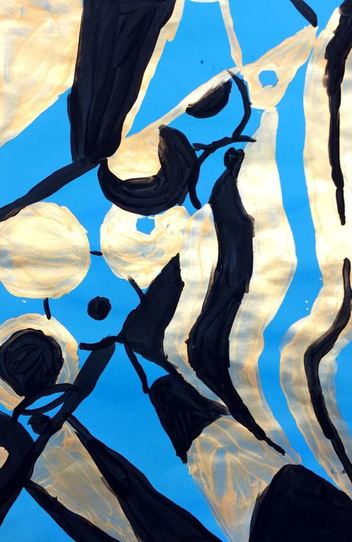
This year, I put a special emphasis on Black History Month and did my best to teach a black artist for each grade level. With 3rd grade, we looked at an artist named Lina Iris Viktor. Lina is the youngest artist any of my students have learned about and they thought it was SOOOO cool that she is just a few years older than I am. Lina's work is characterized by many circles and straight lines that break her paintings up into many geometric shapes. She also restricts her color palette to a particular hue of blue, 24 karat gold, black, and sometimes white. The students noticed that some of her work reminded them of Egyptian Hieroglyphs based on the symbols and her use of gold. Lina's work was recently plagiarized for a Kendrick Lamar video. This was a great opportunity for the students and I to have a discussion because they have learned about copyright and plagiarism in the past in other classes. 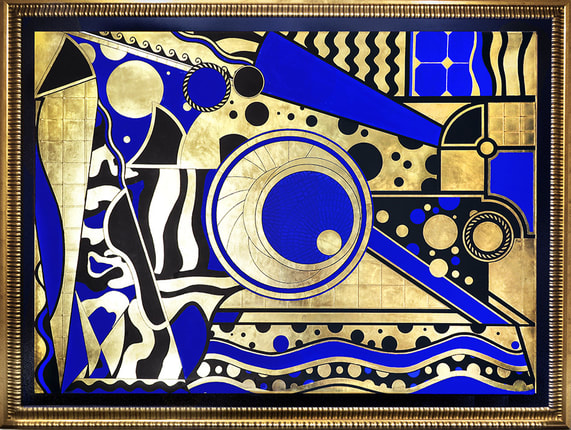 The first day of class, students created two sketches using some of the elements they saw in Lina's work (lines, circle, geometric shapes). After their two sketches, they chose the one they believed was their strongest design and had it ok'd by me. To finish class, they transferred their sketch to a large sheet of colored paper (color of their choice). They were expected to use rulers and different circle tracers I had put out to ensure that they had nice, clean, crisp lines. On the 2nd day of the project, students used gold paint to fill in about a third of their artwork. You would've thought they were using actual gold! They went nuts for it! We talked about different ways to fill in spaces of their artwork (outlining, painting in a shape, painting the space around a shape, etc). I also emphasized outlining things first and then filling in the space. This helps to make smooth outlines. The final day was spent using black on about a third of their project. They were expected to have every pencil line either outlined or filled in. This has probably turned into one of my favorite projects! I love how strong many of their designs!
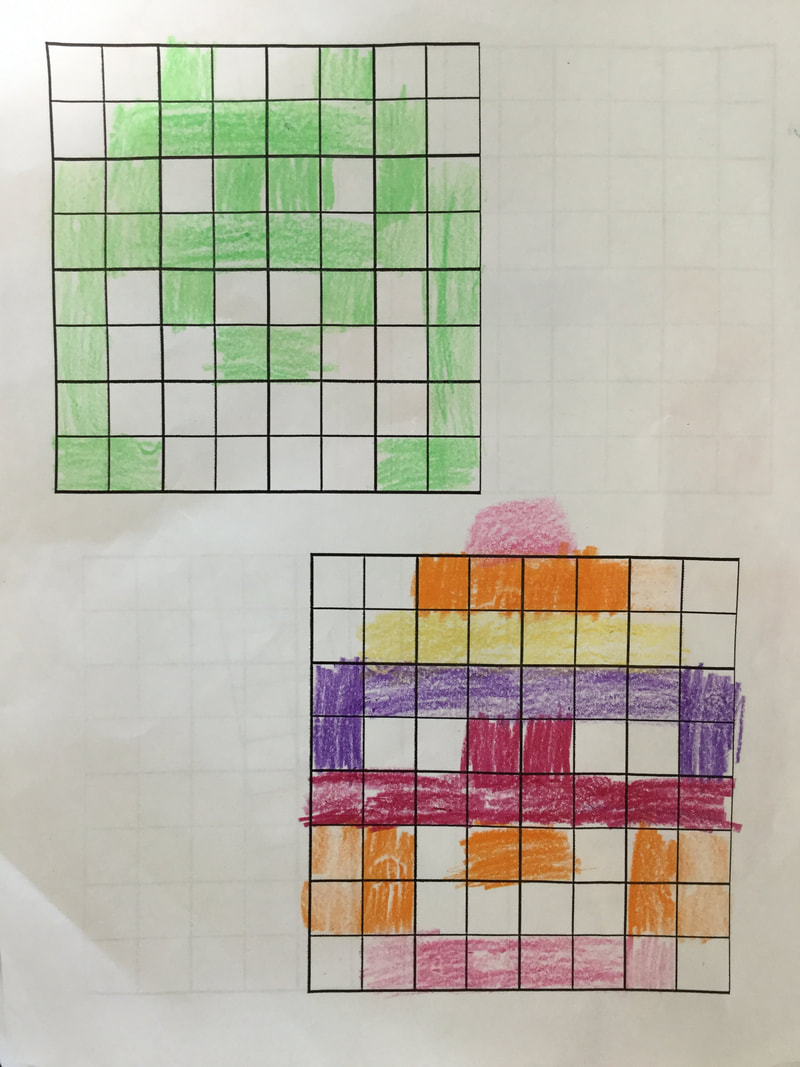
3rd grade has been learning about the French street artist, Invader. Invader is an anonymous artist who uses small bathroom tiles to create mosaics of 8-bit video game characters. He is named after the old arcade game Space Invaders and is most well-known for portraying these in his street art. However, he has moved on to incorporate other video game characters such as Mario and Pac-Man. He likes to display his "invasions" in busy areas of cities due to their high traffic. He believes that everyone should be able to enjoy art, not just people who can afford to go to museums and galleries. I love teaching about street artists because students are always particularly drawn to them. 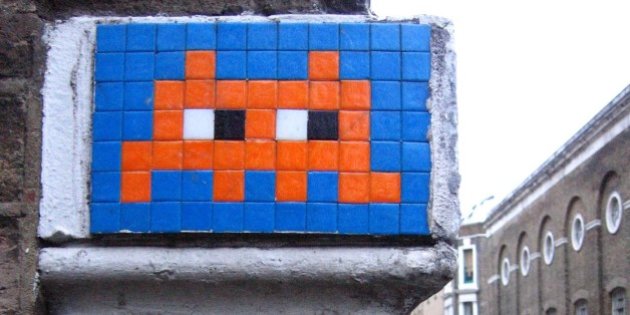 The first day was spent looking at characters from the Space Invaders. We talked about how all the characters are symmetrical and made up of pixels (or small squares). We used gridded paper to re-create Space Invader characters. I wanted them to have a good understanding of how the Space Invaders were symmetrical before moving on to making their own. After a couple practice drawings of old space invaders, students finally had the opportunity to create several of their own. My requirements were that it had to have an eye, be symmetrical, and it had to be 8 pixels high and 8 pixels wide. These requirements were to help the students with keeping their invader symmetrical.
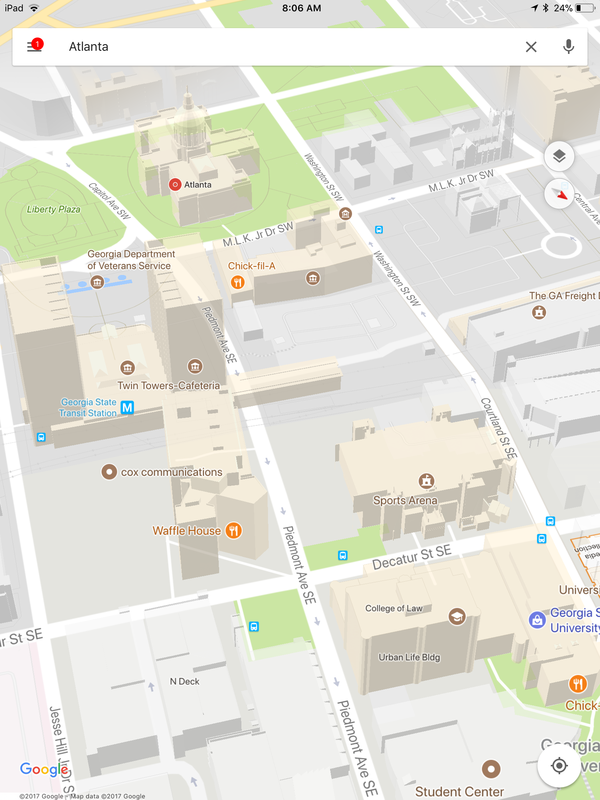
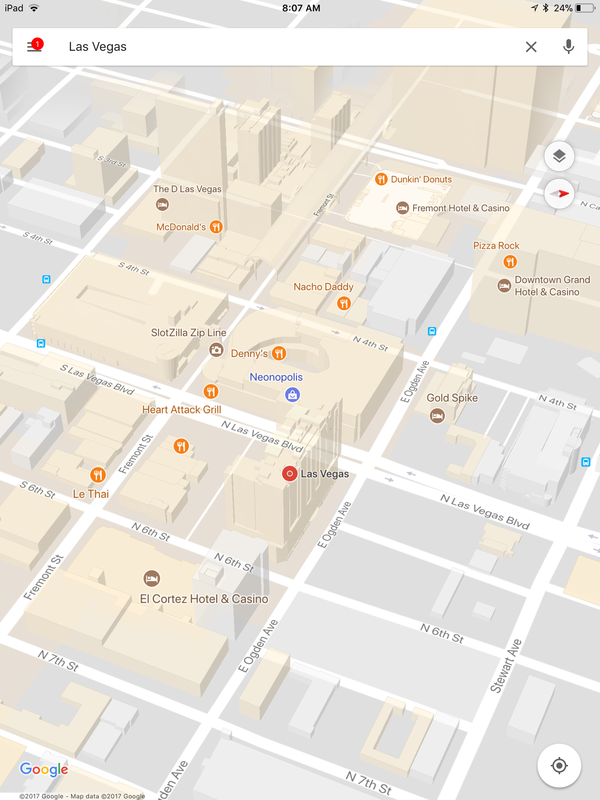
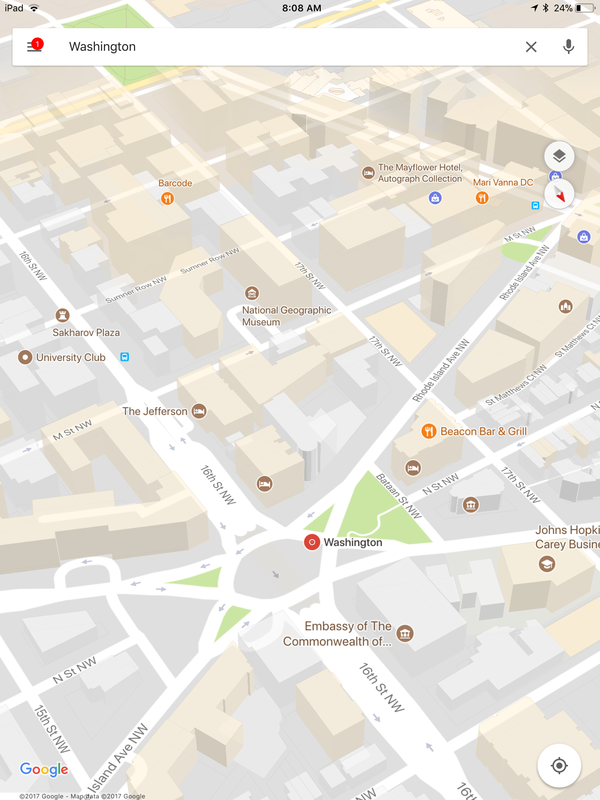
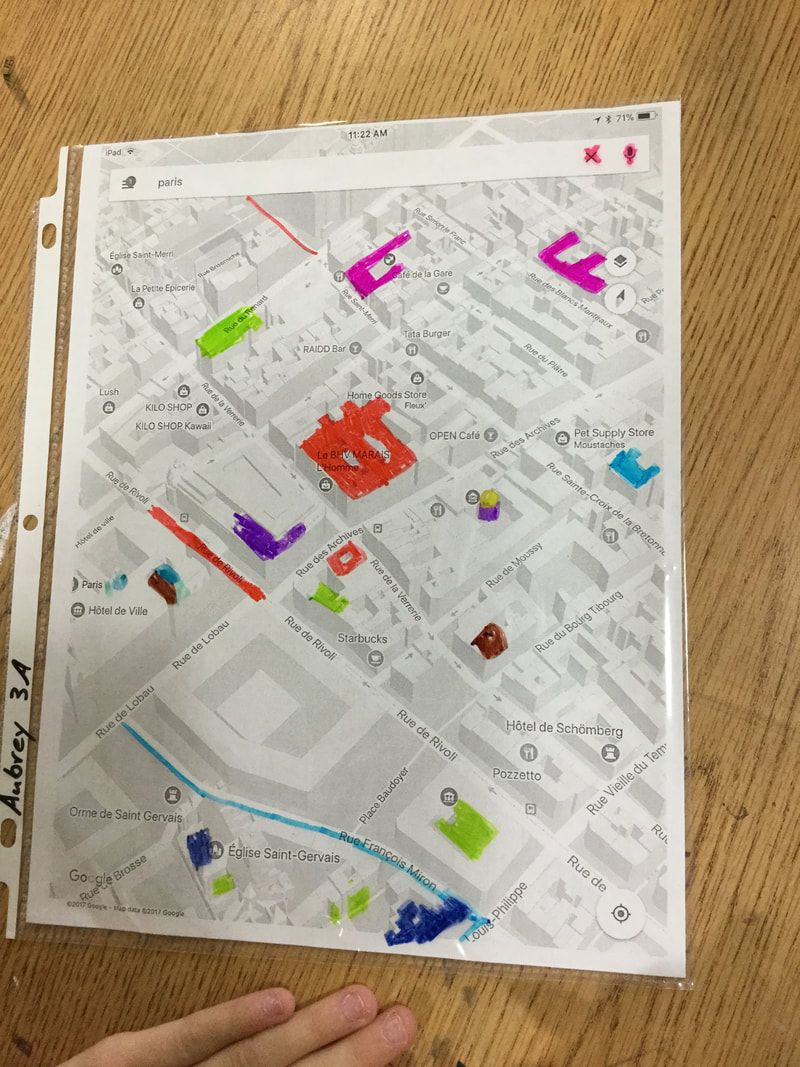
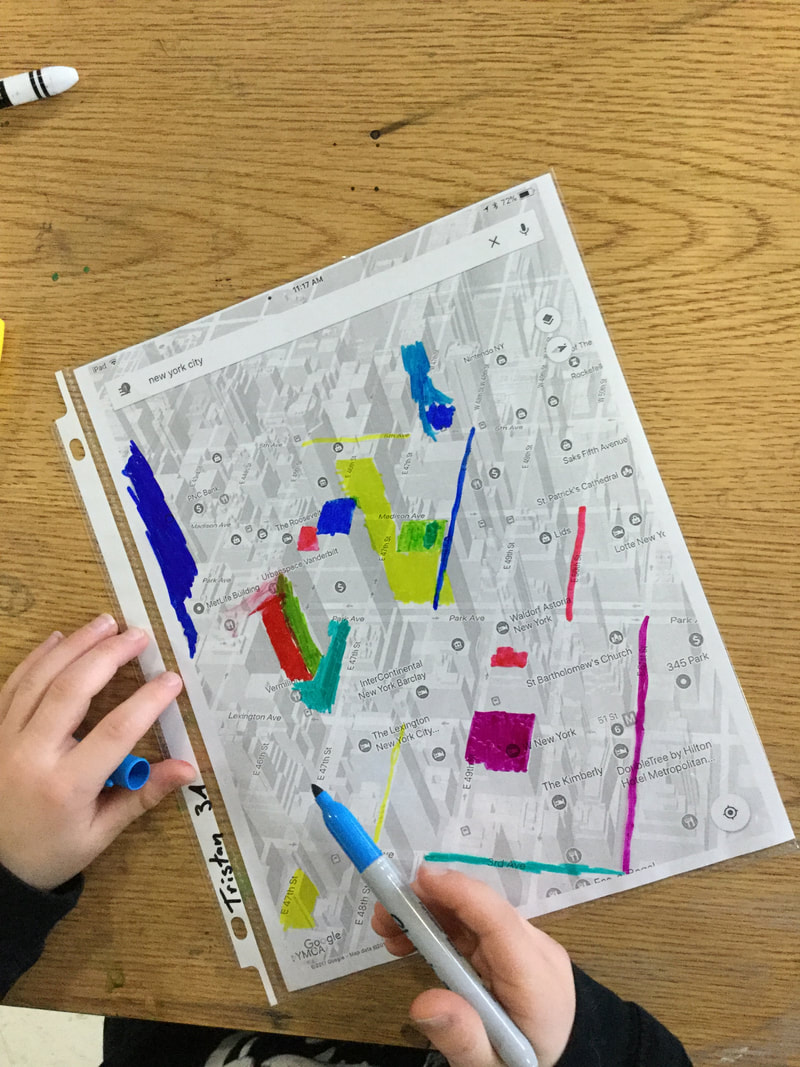
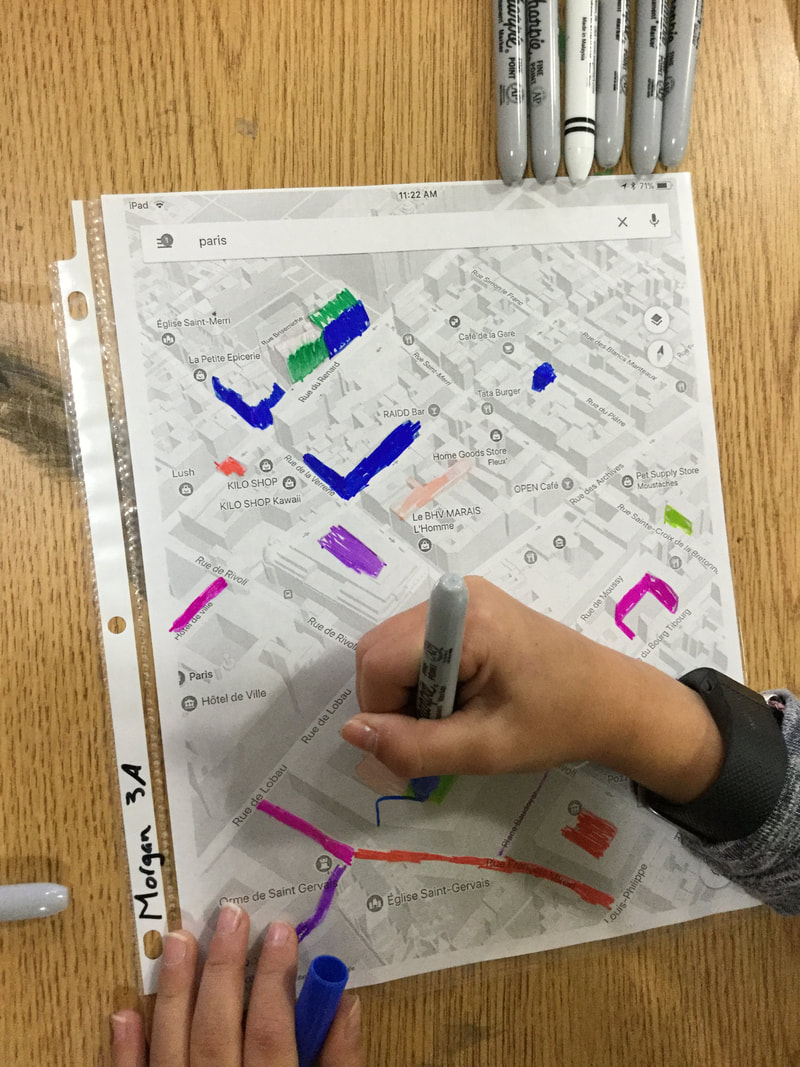
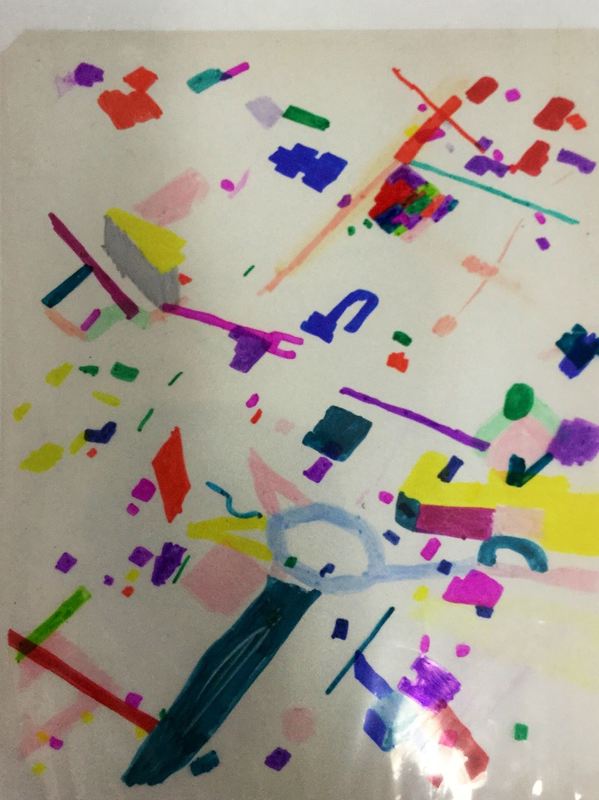
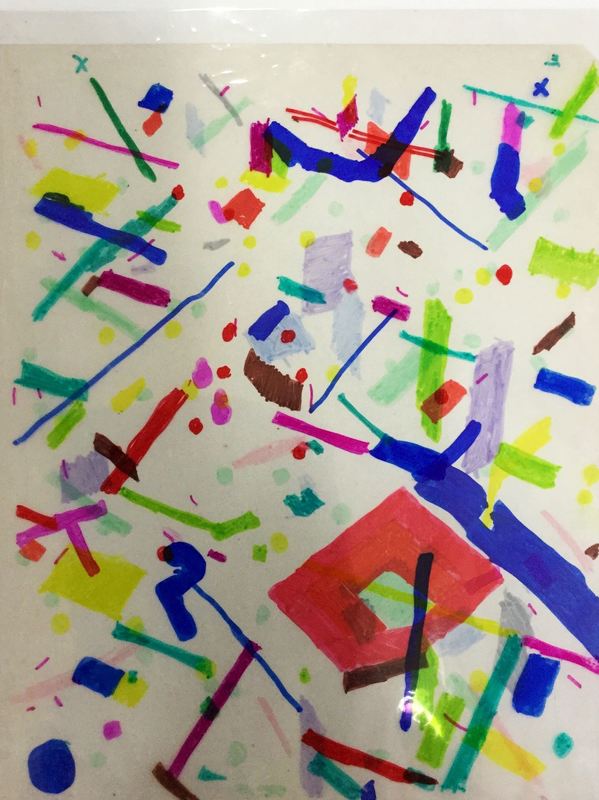
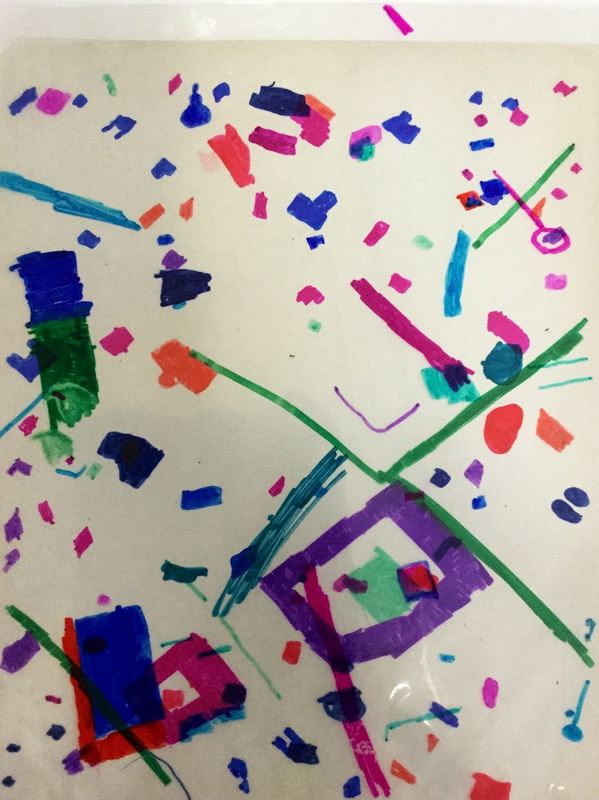
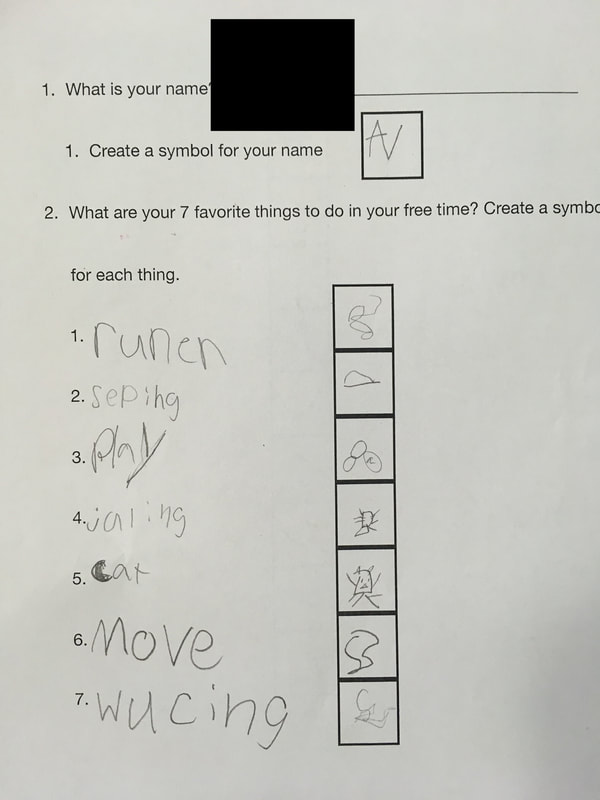
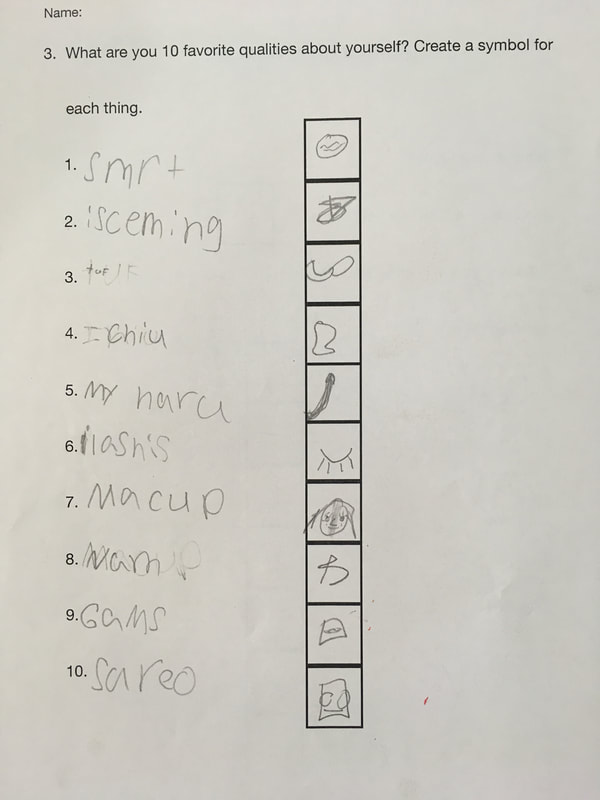
After students got the knack for creating their own Invaders, I created an 8x8 grid using Google Sheets. I uploaded it into Schoology. From there, each student could access it and create their own Invaders by filling in the spreadsheets. When they finished a new character, they screenshot it and then started a new one. This was the first time we had ever used the iPads in art class and they turned out great! 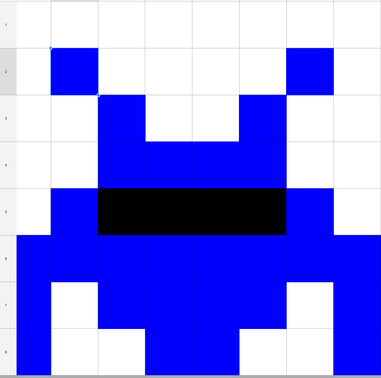 The last half of class on the final day, they created an Invader character in an app called 'Bloxels.' In their classrooms, they had been creating their own worlds in Bloxels. They could then use their own Invader characters to play in the Bloxel worlds they had created! Maya Hayuk is always one of my favorite artists to teach each year! I just love her use of bright colors! Here is the write up on this project from previous years. Enjoy the pictures from this year's students! 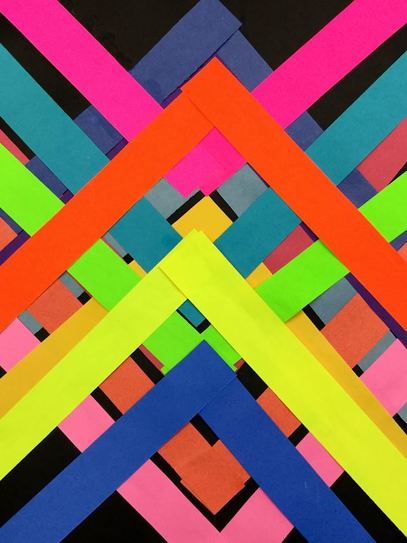 3rd grade recently wrapped up learning about Richard Serra. I wrote about this project last year so you can find all the details here. Check out some of the awesome work they did below!  I typically try to reach out to the artists that we learn about in class (if they are still living). Once in a while, we get a tweet or an email back from them. 3rd grade recently learned about Julie Mehretu and even received a few tweets of praise back from her! 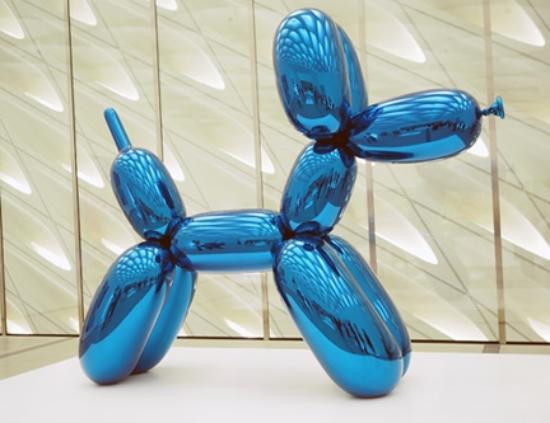 We looked at Jeff Koons' work. Koons is an American Post-Pop artist. He is most well-known for his large reflective sculpture balloon dogs. Most of his sculptures use a reflective surface. He likes how the reflective surface changes the way you perceive the area around you by warping and distorting the room on its shiny shell. He depicts objects that are popular in pop culture such as balloon animals, Popeye, and pool inflatables. His sculptures are highly rendered, down to the subtle creases along the seems of his metal pool inflatables. I find his balloon dogs particularly interesting because they toy with the idea of life and death. When something is full of air/breath like a human or a balloon, the item is thought to have life. But when those things run out of air, they become deflated or lifeless. By creating balloon dogs out of metal, they lose their ability to deflate making them immortal. He is a highly controversial artist who uses around 130 "assistants" to produce his ideas. The kids were amazed that he is the second richest living artist and is worth $500 million. We did an observational drawing of a balloon dog inspired by Koons. To do this, we had to learn to break the dog's shape down into different sized ovals. After drawing it, we then traced over our lines with glue then left them to dry on the drying rack. For the second day of the project, we talked about form. Typically, we talk about form as being something that is 3D but it can ALSO be something that has the illusion of being 3D. To do this, we would need to add shadows and highlights to our dogs. We chose a color and LIGHTLY chalked the various sections of our dog. The glue lines help to contain the chalk and the chalk also wipes off of the glue lines easily at the end of the project. They gently blended the chalk and then re-chalked it, making sure not to chalk quite to the bottom this time. Then smoothed and chalked again, going even less far down on the dog. By going over parts of the dog over and over, it creates a bright spot on the dog called a highlight. This gives the illusion that the sun/light is hitting that part of the dog. Lastly, we added a touch of black opposite of the highlight to give the dog some shadows. By adding highlights and shadows, our dogs now looked like they were 3D or had form. 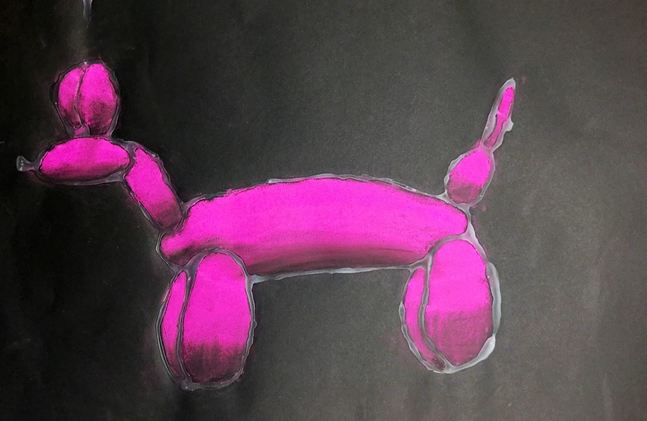 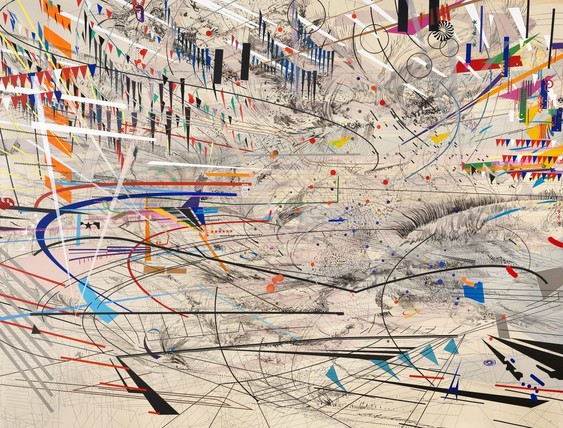 3rd grade is currently wrapping up learning about one of my favorite artists, Julie Mehretu! Each year, I give the table groups in my room a different theme and this year's theme is contemporary female artists. Julie Mehretu is one of my table groups and students have been hoping to learn about her! This project was also inspired by another art teacher who made abstractions of maps on iPads that were inspired by Mehretu. Mehretu is originally from Ethiopia but has since moved to the Michigan where she has spent most of her life. She is very inspired by architecture and chooses bits and pieces from different buildings and perspectives to paint. She also uses a lot of maps, charts, blueprints, etc in her work. She puts layer upon layer upon layer of different lines, shapes, and colors to build up her eye-catching paintings. Students were given the opportunity to choose from quite a few different maps that I had screen-shotted from Google Maps. After choosing a map, they slid their map into a see-through paper protector. Students then used sharpies to color in certain parts of the map. They could color entire buildings, parts of buildings, roads, etc. The second class, they chose a new map and slid it into their paper protectors. This time, they put it in backwards so they were working on the side of the paper protector that they didn't work on last time. They continued to color in parts of the map. The final day, students chose a final map and colored in parts of the map on a transparency sheet. While they worked, I used double-sided tape to tape their paper protector to a white sheet of paper. I did this so that their lines and shapes of color would show up better on the finished product. At the end of class, students slid their transparency into their paper protectors and this created a work of art that used 3 different layered maps. I'm super pumped with how awesome these turned out! This has become one of my favorite projects! 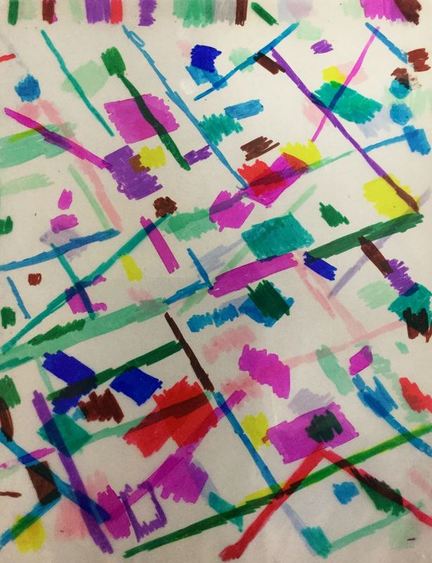 3rd grade started off the year learning about RETNA and El Mac. Both are street artists from Los Angeles. RETNA . RETNA is an artist who has created his own language using symbols. His symbols are influenced by different languages from around the world. He mixes all of these different languages together to create a new language that nobody can read, but everybody can relate to because of a recognition of some of the symbols. 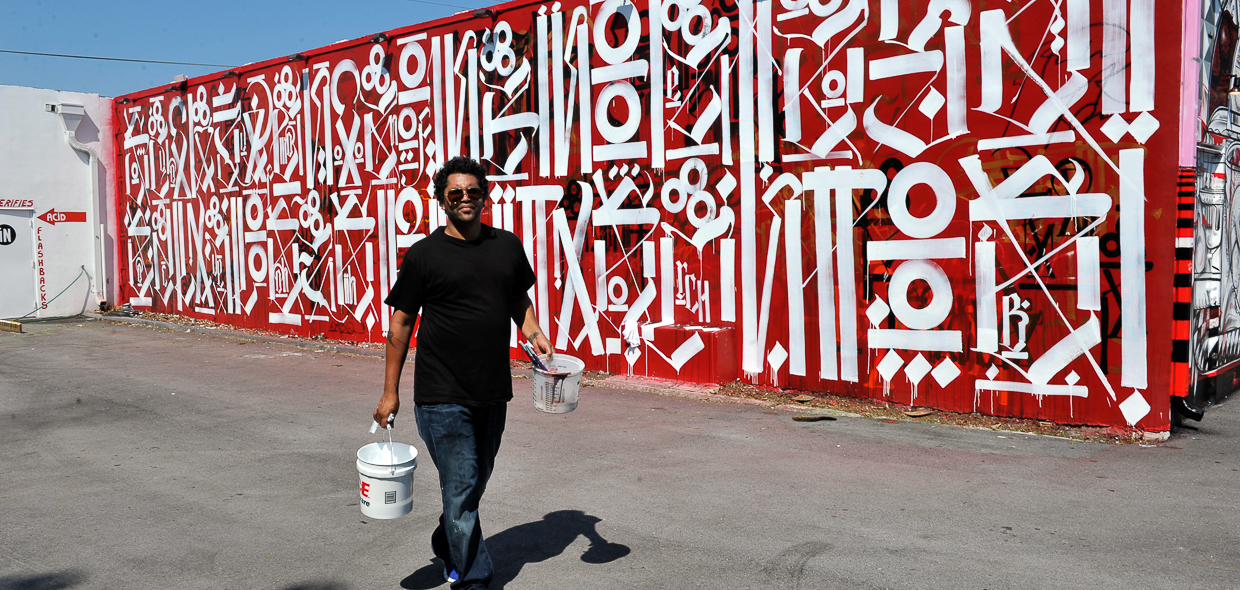 RETNA and his work. El Mac is an artist who creates portraits of people who he sees in everyday. His portraits are typically painted monochromatically. This means that he uses only one color to depict the portraits. He also uses short spray paint strokes which creates a line effect. 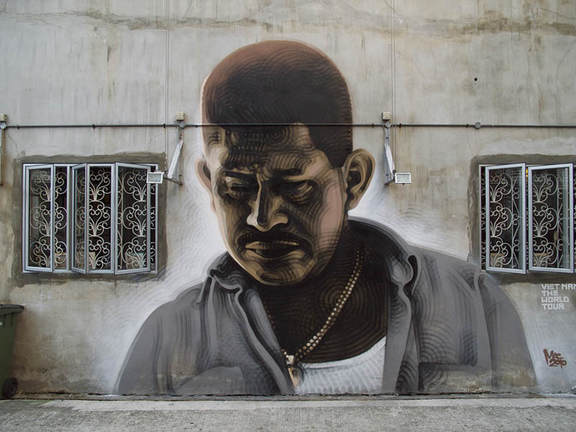 El Mac's work. At times, RETNA and El Mac will collaborate to create a mural together. RETNA typically makes the background with El Mac incorporating a portrait on top. 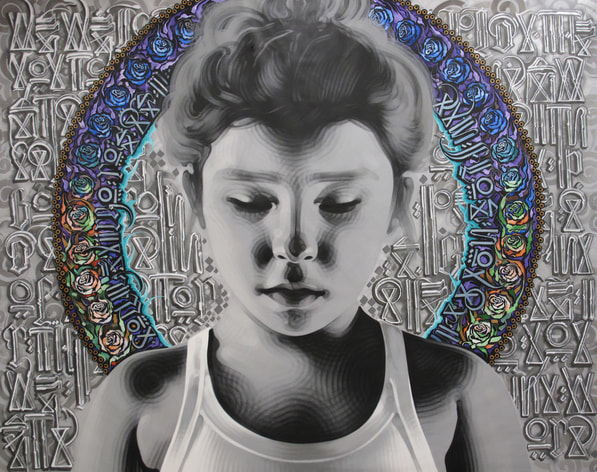 Their collaboration. Students started off with a worksheet that had them create their own symbols. They had to create a symbol that represented their name, seven symbols that represented their favorite things to do in their free time, and 10 symbols that represented their favorite qualities about their selves. I emphasized that their symbols should be simple because they would have to repeat them over and over and over. It was their choice if they wanted their symbols to be more representational or more abstract.
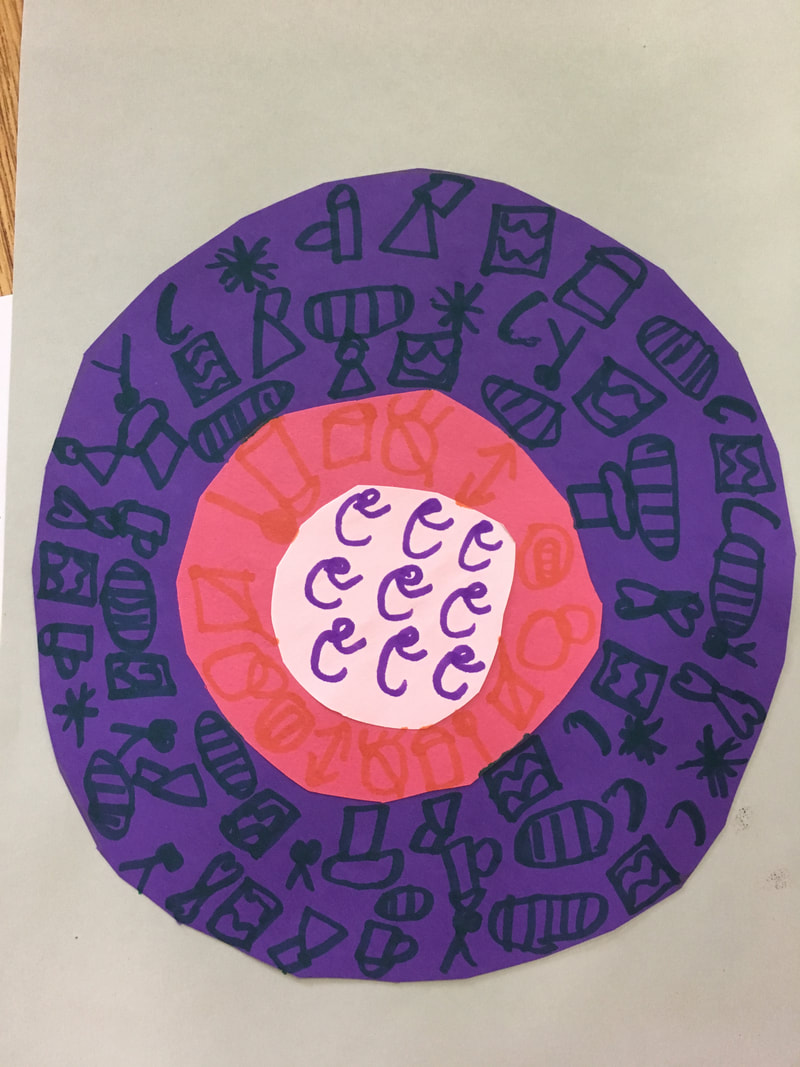
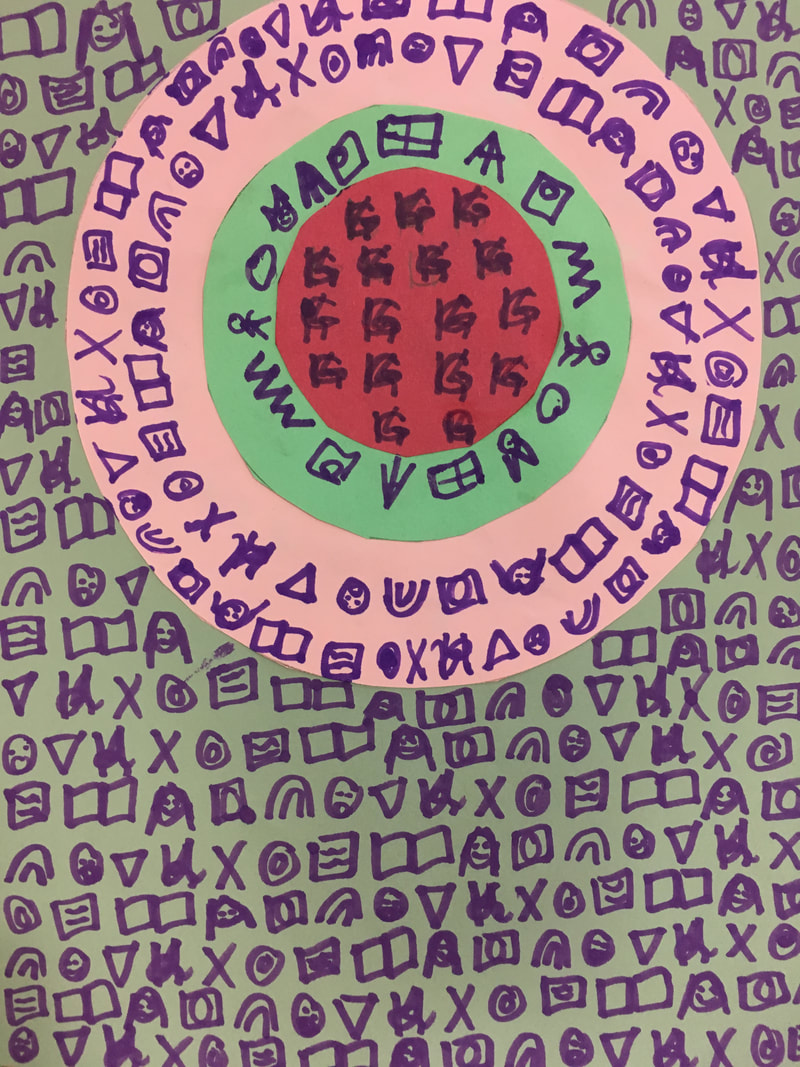
Next, students cut out 3 different sized circles and created what looked like a target. Then they added these symbols to the target. In the smallest circle in the center, they repeated their name symbol over and over. In the medium sized circle, they repeated the seven things that they like to do in their free time. And in the larger circle, they repeated the 10 symbols that represent their favorite qualities about themselves. If they wanted to go above and beyond my expectations, they could also add these symbols to the grey background.
The next part of the project we learned about self-portraits. I had them do a drawing without my help of the best self-portrait they could draw. After they were finished, I gave them a crash course in facial proportions and where things belong on our face and how big they should be. Students were amazed at how much better they got in one class. After drawing their self-portrait, they used a Sharpie to trace their lines and then he erased any leftover pencil lines. Then they chose one color to make marks all over their self-portrait. This was meant to be representative of El Mac’s line work on his portraits. Students had the liberty to choose squiggly lines, geometric lines or cross hatching. Lastly, students used crayons and colored pencils of the same color that they had previously used to color in their self-portrait. This created a monochromatic look. Students were a little bummed that their self-portrait covered up so many of their symbols. We talked about how WE knew how much hard work had gone into those backgrounds and symbols and that it didn't matter if it was covered. 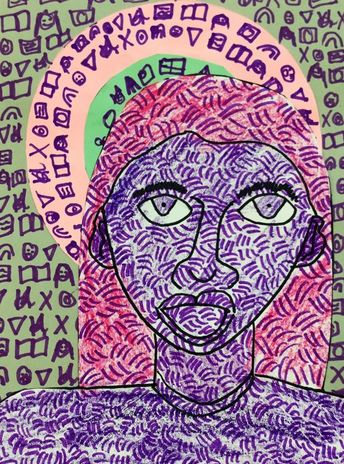 |
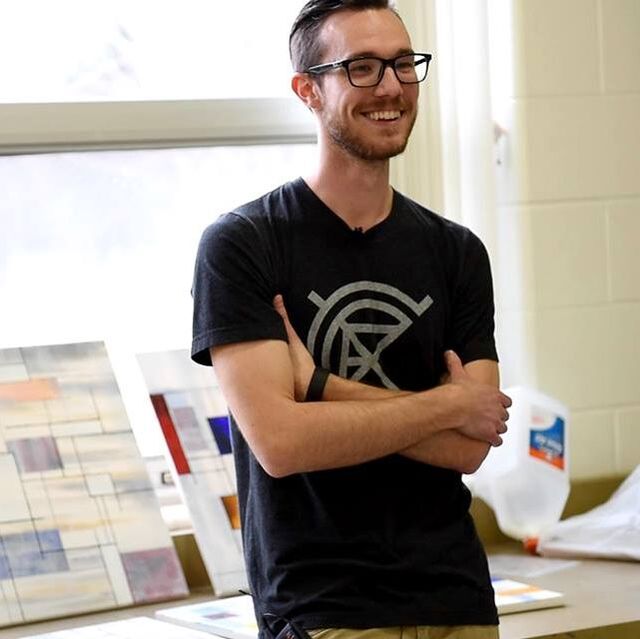
Devon CalvertHarmony and Consolidated Elementary Art Teacher in Milton, WI. UW-Eau Claire graduate. WAEA President. Apple Teacher. 
Archives
March 2019
Categories
All
|









 RSS Feed
